Telogen effluvium causes increased daily shedding, often two to three months after illness, fever, surgery, stress, crash dieting, nutritional deficiency, a change in medicine or hormonal shifts. Identifying the trigger is central to recovery.
Management addresses the underlying factors alongside scalp and hair support. Acute shedding often improves as triggers resolve, though timelines vary. Supportive options may include nutritional correction, scalp treatments and, where appropriate, IV zinc support.
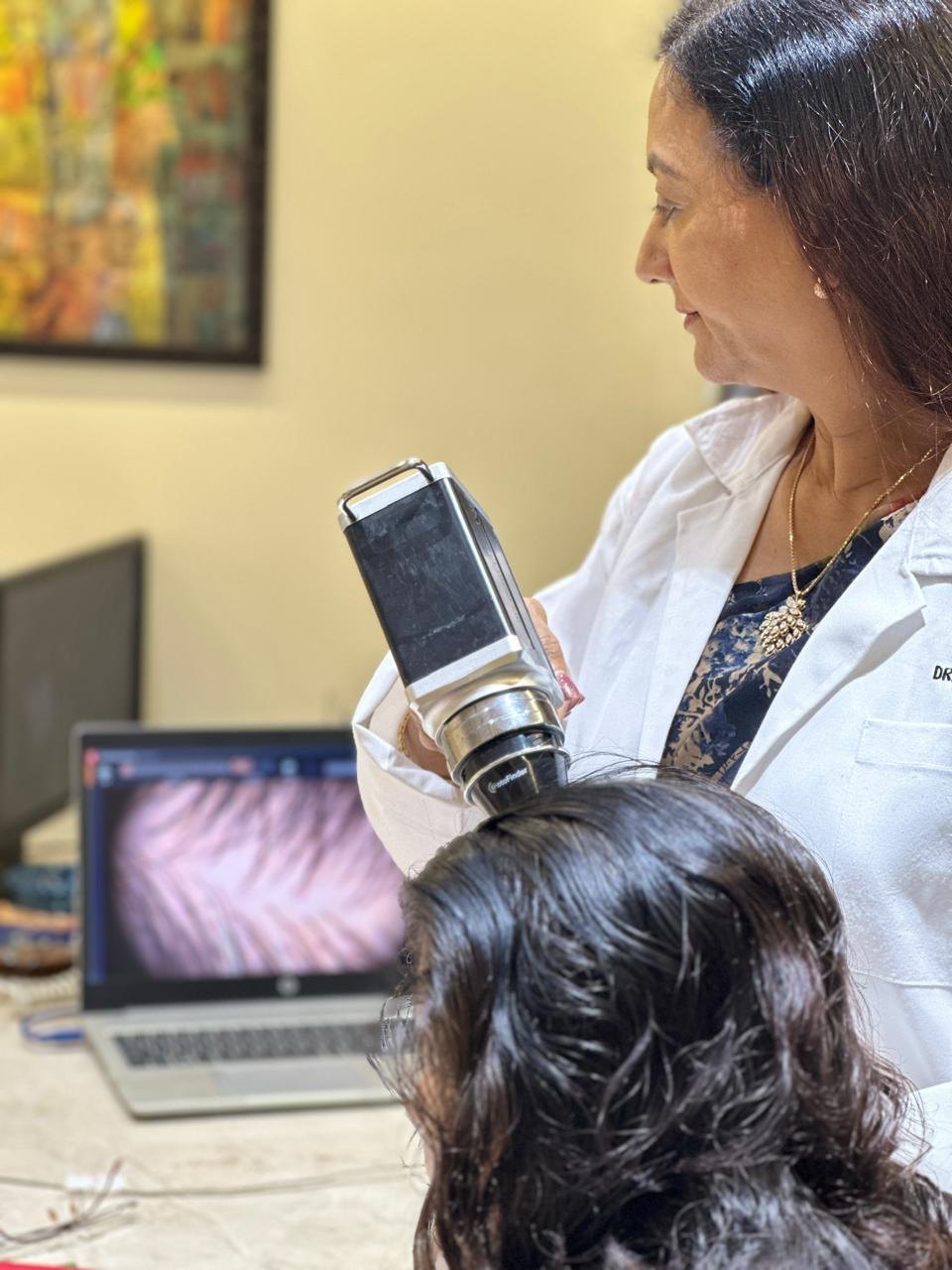
We track recovery of the hair cycle at follow-up visits so that you know whether shedding is settling and when new hair is coming in. Suitability and expected outcomes are determined after clinical assessment. Outcomes vary according to diagnosis and individual response.
Hair loss treatment is selected according to your diagnosis, not a standard package. Suitability and expected outcomes are determined after clinical assessment. Outcomes vary according to diagnosis and individual response.