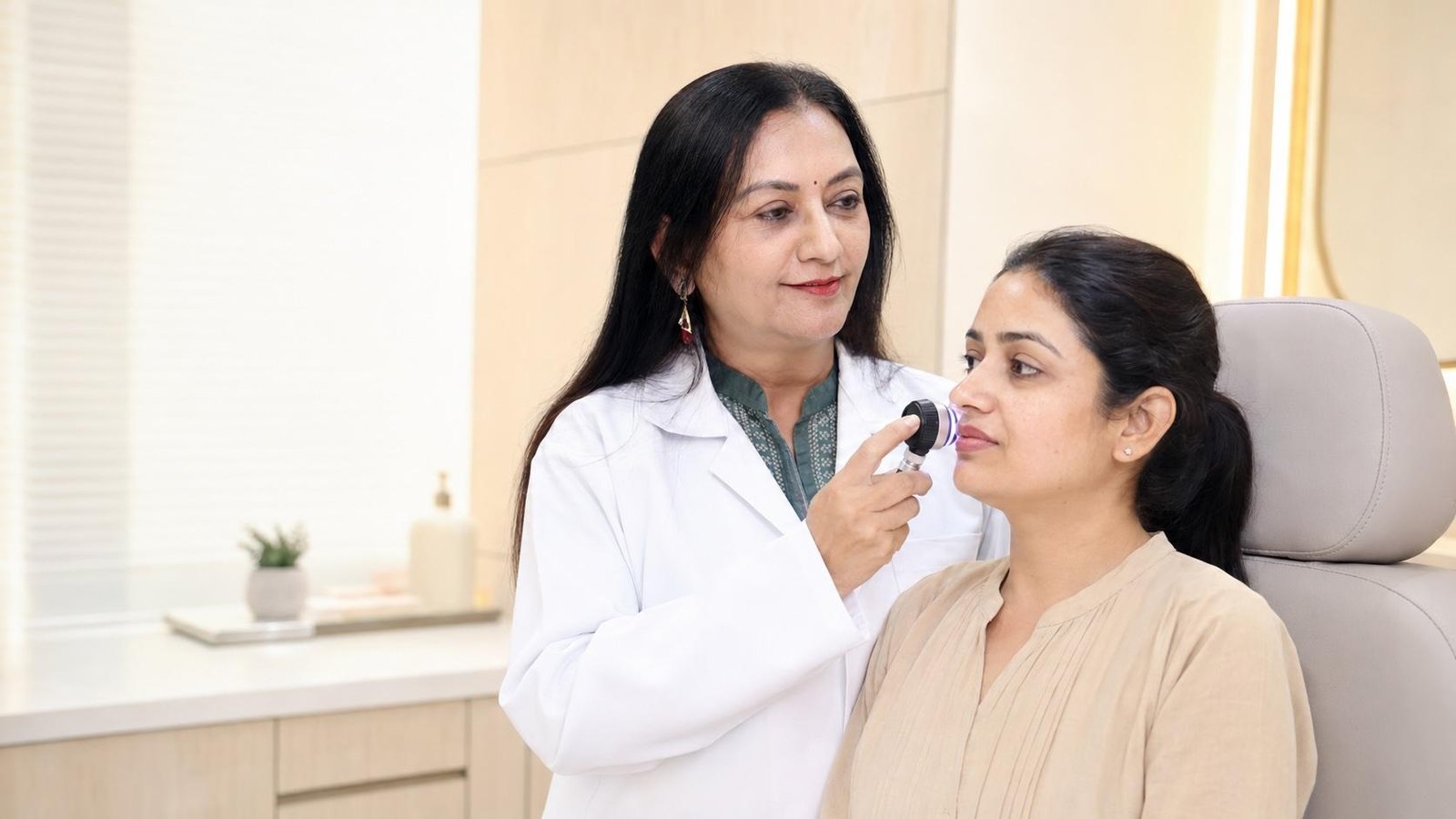
Stretch marks, depressed scars and raised hypertrophic scars develop through different biological processes and cannot be treated with the same procedure. At RD Clinic, Dr. Rachita Dhurat first assesses whether the scar represents collagen loss, abnormal collagen accumulation or a combination of altered texture and pigmentation before planning treatment.
Stretch marks develop when the skin expands or changes faster than its collagen and elastin framework can adapt. They may occur following pregnancy, rapid weight change, growth spurts, bodybuilding, hormonal conditions or prolonged corticosteroid use.
Atrophic scars appear depressed because of collagen and tissue loss. Depending on the age, colour and depth of the scar, treatment may include collagen-stimulating procedures and injectable platelet-rich fibrin (iPRF).
iPRF is prepared from the patient’s own blood and contains platelets, fibrin and naturally occurring growth factors. When used in appropriately selected scars, it may support tissue repair and progressive collagen remodelling. It may be used alone or combined with procedures such as RF microneedling, fractional CO₂ laser or carboxytherapy.
Hypertrophic scars are thick, firm and raised but usually remain within the boundaries of the original injury. Keloids may continue growing beyond the original wound and may cause itching, pain, tenderness or cosmetic concern.
Treatment must control excessive collagen activity rather than stimulate additional collagen. Depending on the scar’s thickness, location and activity, Dr. Rachita Dhurat may recommend:
Most raised scars require a series of treatments, and recurrence remains possible. Early assessment is especially important when a scar is progressively thickening, spreading, painful or itchy.
There is no universal “scar-removal” procedure. Treatment is selected according to:
The goal is to make the scar progressively flatter, softer, smoother and less noticeable. Complete disappearance cannot be guaranteed, and results vary between individuals.