RD Clinic

Female Hair Loss

Home  /  Hair & Scalp  /  Female Hair Loss
Female Hair Loss

Female Hair Loss

Diagnosis and personalised care for female pattern hair loss and other causes of thinning in women.
Female Hair Loss

Female Hair Loss

A gradual widening of the part is often the first sign. Early assessment gives the most options.

Female pattern hair loss typically presents as gradual thinning over the crown and mid-scalp, often with a widening of the part. The frontal hairline is usually preserved. It is influenced by genetics and hormones, and other factors such as iron deficiency, thyroid disease or stress can add to it.

Dr. Rachita Dhurat is Chief Editor of the book Female Pattern Hair Loss and has a special clinical and academic interest in hair loss in women.


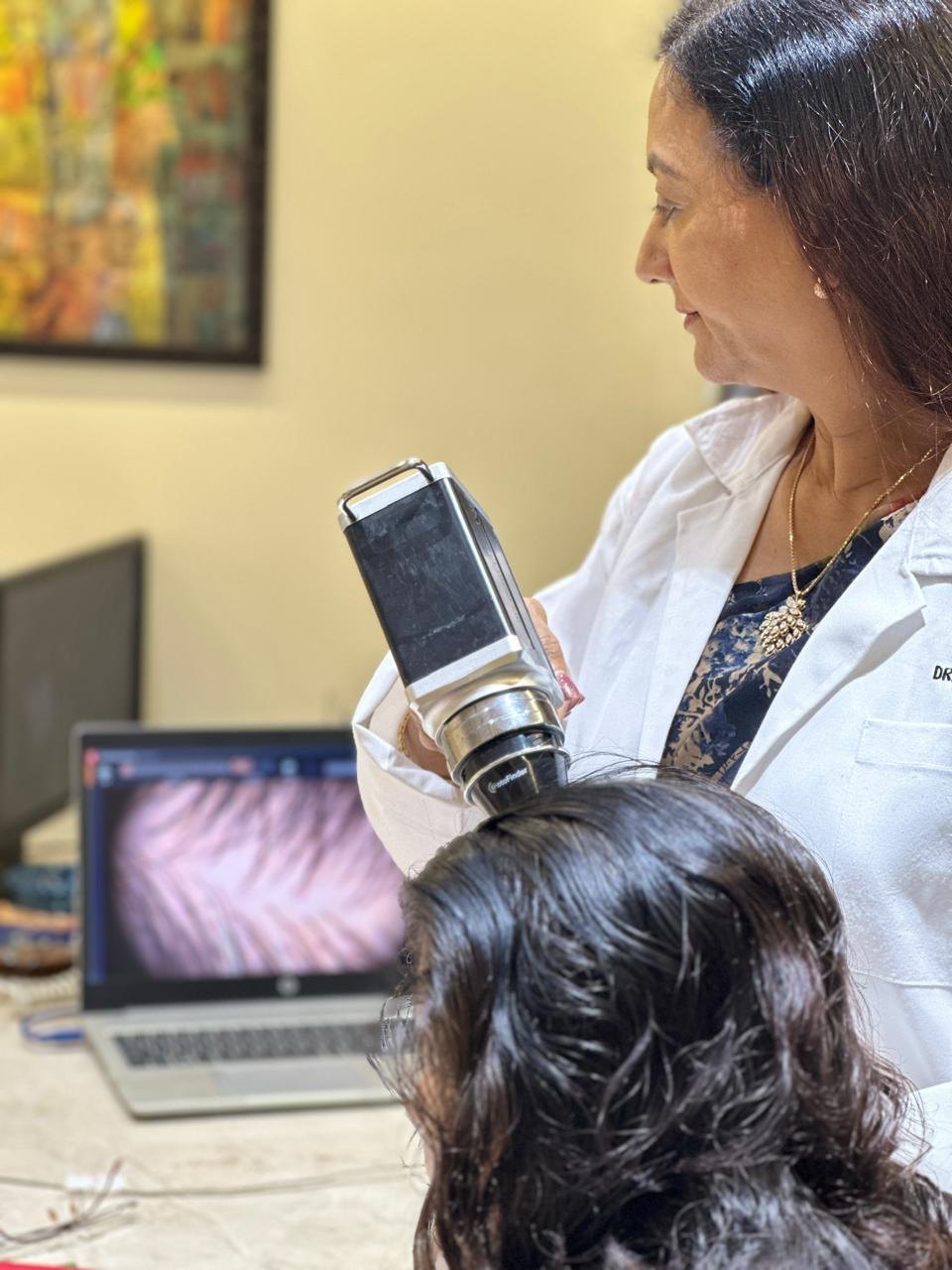
At RD Clinic, care begins with a detailed clinical history, trichoscopy and targeted investigations where needed.

  • Detailed history of onset, progression, pregnancy, periods, diet, medicines and family history
  • Trichoscopy to look for miniaturisation and variation in hair-shaft thickness
  • Blood tests only when they are indicated — for example for anaemia, iron, thyroid or hormonal problems

Treatment is individualised after trichoscopy and clinical review. It may include:

  • Topical or oral medical therapy selected for you
  • Regenerative treatments such as platelet-derived and growth-factor therapies
  • Low-level light therapy and scalp-boosting procedures
  • Correction of contributing factors such as iron deficiency or thyroid disease
  • Supportive scalp care

Pattern hair loss is a long-term condition; treatment aims to reduce shedding, improve density and maintain results.

Hair cycles are slow, so improvement is judged over months, not weeks. Density and shedding are monitored over time so that treatment can be adjusted. Suitability and expected outcomes are determined after clinical assessment. Outcomes vary according to diagnosis and individual response.

Begin With the Right Diagnosis

Begin with the right diagnosis.

Hair loss treatment is selected according to your diagnosis, not a standard package. Suitability and expected outcomes are determined after clinical assessment. Outcomes vary according to diagnosis and individual response.