Acne may clear, but the scars it leaves behind can continue to affect skin texture and confidence. Established acne scars rarely disappear completely on their own, and creams alone cannot adequately correct deeper pits or rebuild lost collagen.
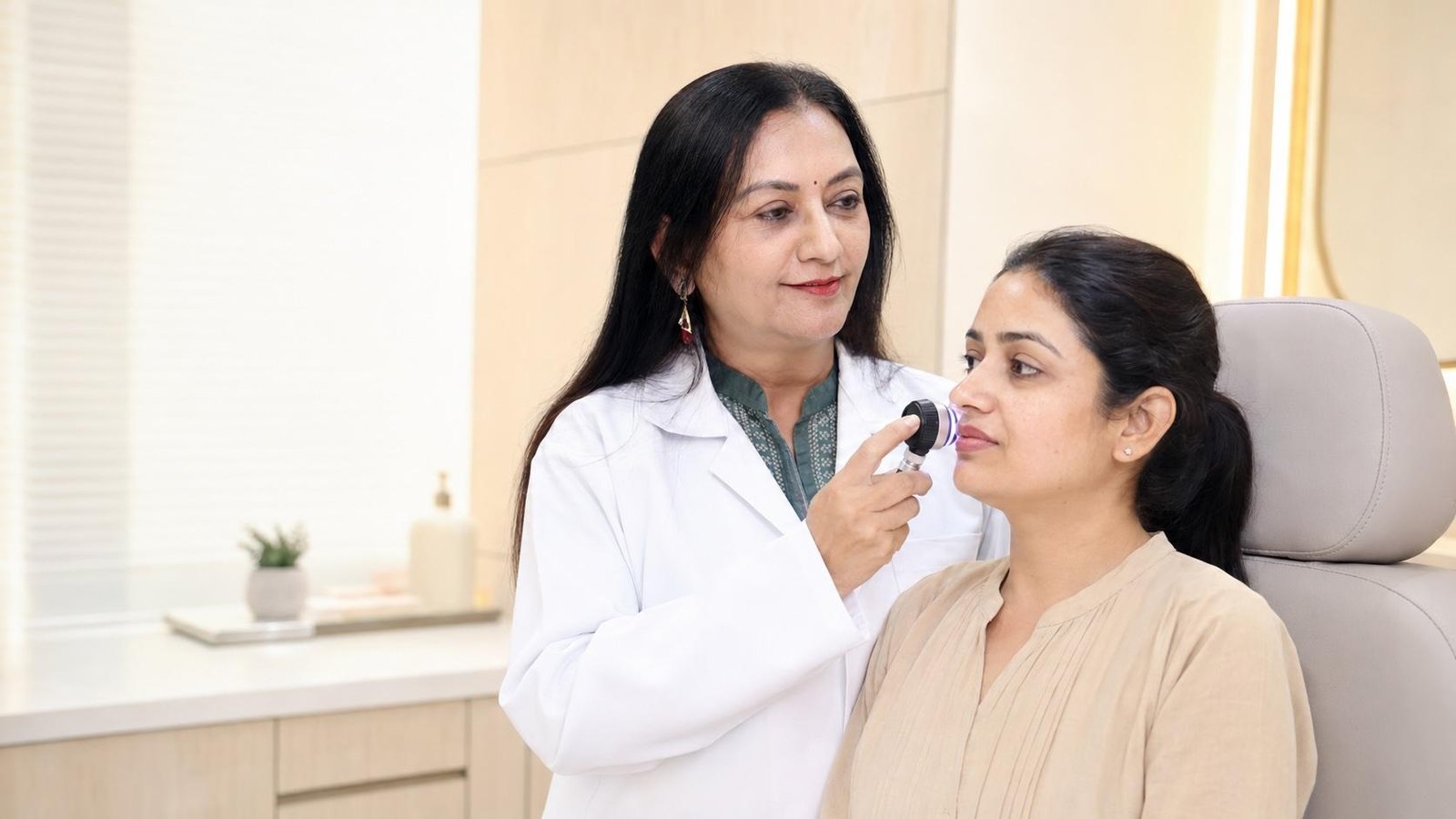
At RD Clinic, acne scars are not treated with a standard package or a single machine. Dr. Rachita Dhurat carefully assesses the type, depth and distribution of each scar before creating a personalised, staged treatment plan.
The aim is to progressively release depressed scars, stimulate collagen remodelling and restore smoother, more even-looking skin.
Flat red or brown spots left after acne are usually post-inflammatory marks rather than true scars. These may improve with medical skincare, chemical peels and pigment-targeting procedures.
True acne scars alter the structure of the skin. They may appear as pits, depressions, uneven texture or raised areas and usually require procedural treatment for meaningful improvement.
Most patients have a combination of scar types:
Each scar type responds differently. This is why accurate scar assessment is more important than simply choosing a machine.
Depending on your scar pattern, skin type, pigmentation tendency and acceptable downtime, your treatment plan may include one or more of the following:
Fractional CO₂ laser creates controlled microscopic treatment zones within the skin to stimulate collagen remodelling. It may help improve selected boxcar scars, superficial depressions, enlarged pores and uneven skin texture.
Treatment intensity is carefully customised for Indian skin to balance improvement with recovery and the risk of post-procedure pigmentation.
Radiofrequency microneedling delivers controlled energy through fine needles into the deeper layers of the skin. It stimulates collagen and elastin remodelling while limiting unnecessary disruption of the skin surface.
It may be particularly useful for selected rolling and boxcar scars, enlarged pores and irregular skin texture.
RD Clinic offers an advanced exosome-assisted protocol for selected patients with acne scars. Exosome-based formulations contain biologically active signalling components being studied for their potential role in supporting cellular communication, skin repair and collagen remodelling.
Where medically appropriate, an exosome-based formulation may be incorporated into a treatment programme involving fractional CO₂ laser or RF microneedling. This approach is designed to support recovery and progressive improvement in skin texture.
Exosome-assisted treatment is not presented as a stand-alone miracle treatment. It is carefully selected as part of a personalised scar-correction programme based on the patient’s scar pattern, skin condition and medical suitability.
Rolling and tethered scars are often pulled downward by fibrous bands beneath the skin. Subcision releases these bands, allowing suitable depressed scars to lift. It may be combined with collagen-stimulating procedures for more comprehensive correction.
Deep ice-pick scars may require focused chemical reconstruction rather than treatment of the entire face. Medical chemical peels may also be considered for superficial irregularities and accompanying post-acne pigmentation.
Carboxytherapy may be incorporated into selected treatment plans to support local circulation and tissue remodelling. Its suitability depends on the type and depth of the scars and is determined during clinical assessment.
In selected patients, dermal fillers may be used to elevate suitable depressed scars and improve skin contour. The decision depends on the scar’s depth, mobility and surrounding skin.
A patient may have ice-pick, rolling and boxcar scars on the same cheek. Treating all these scars with only one procedure may produce limited improvement.
A personalised combination plan may be designed to:
This scar-specific approach targets the individual cause of each scar instead of repeatedly treating the entire face with the same device.
New inflammatory breakouts can create new scars. Active acne should therefore be adequately controlled before intensive scar-correction procedures are started.
In selected patients, acne treatment and suitable scar procedures may be planned together. Early treatment of painful nodules and cysts is particularly important because deeper inflammation carries a greater risk of permanent scarring.
Acne-scar correction is a gradual process. Most patients require a planned series of treatments rather than a single session.
The number of sessions, recovery period and expected improvement depend on:
The goal is visible, progressive improvement in skin texture. Complete removal of every scar cannot be guaranteed, and results vary between individuals.